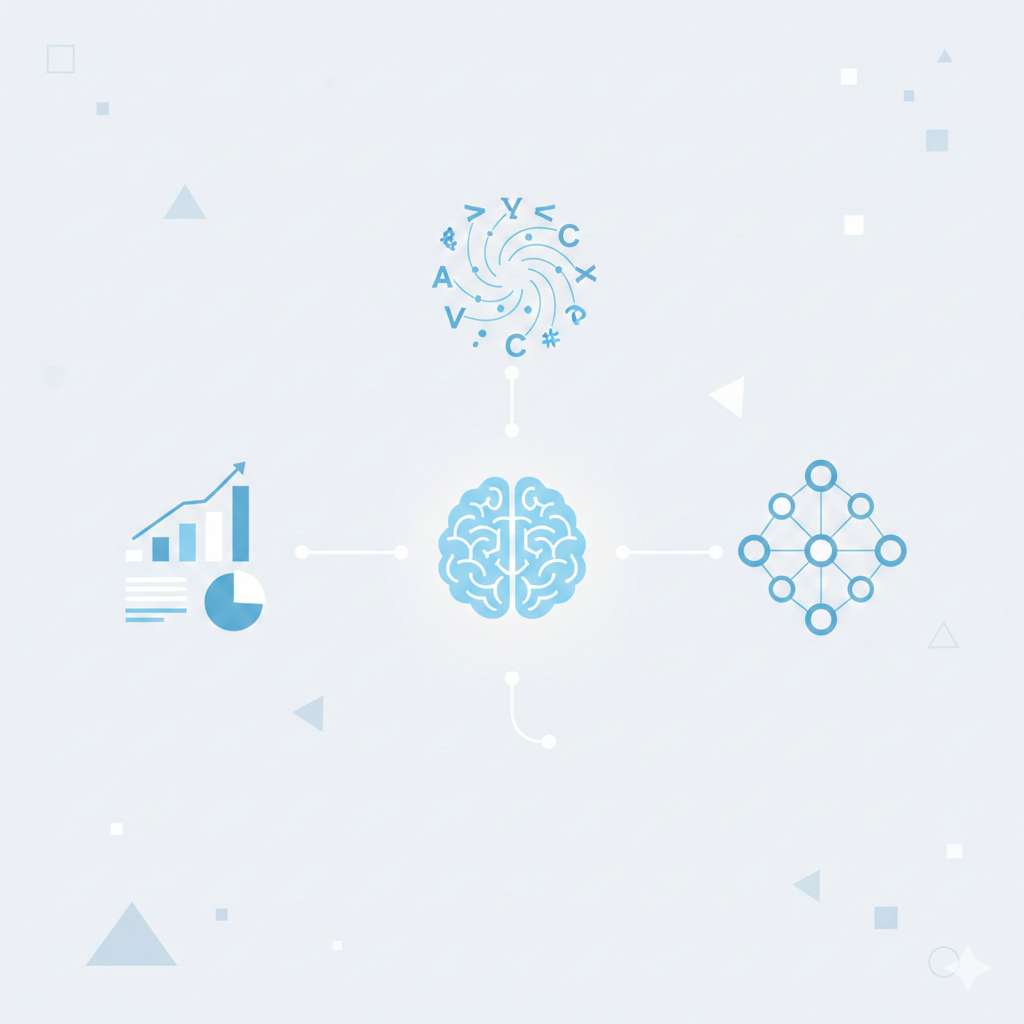
Machine Learning is one of the most important technologies behind modern Artificial Intelligence. While Artificial Intelligence focuses on making machines intelligent, Machine Learning is the method that allows machines to learn from data and improve automatically without being explicitly programmed for every task.
Machine Learning is one of the most important technologies behind modern artificial intelligence, which focuses on building machines capable of intelligent behavior.
Today, machine learning is used everywhere—from recommendation systems and voice assistants to fraud detection and self-driving cars. Despite its widespread use, many people still find the concept confusing.
In this article, we’ll explain what machine learning is, how it works, its main types, and real-world examples—all in simple, easy-to-understand language.
What Is Machine Learning?
Machine Learning (ML) is a branch of Artificial Intelligence that enables computers to learn patterns from data and make decisions or predictions based on that data.
Instead of following fixed rules written by a programmer, a machine learning system improves its performance by analyzing examples and experiences.
In simple terms:
Machine learning allows machines to learn from data, just like humans learn from experience.
How Does Machine Learning Work?
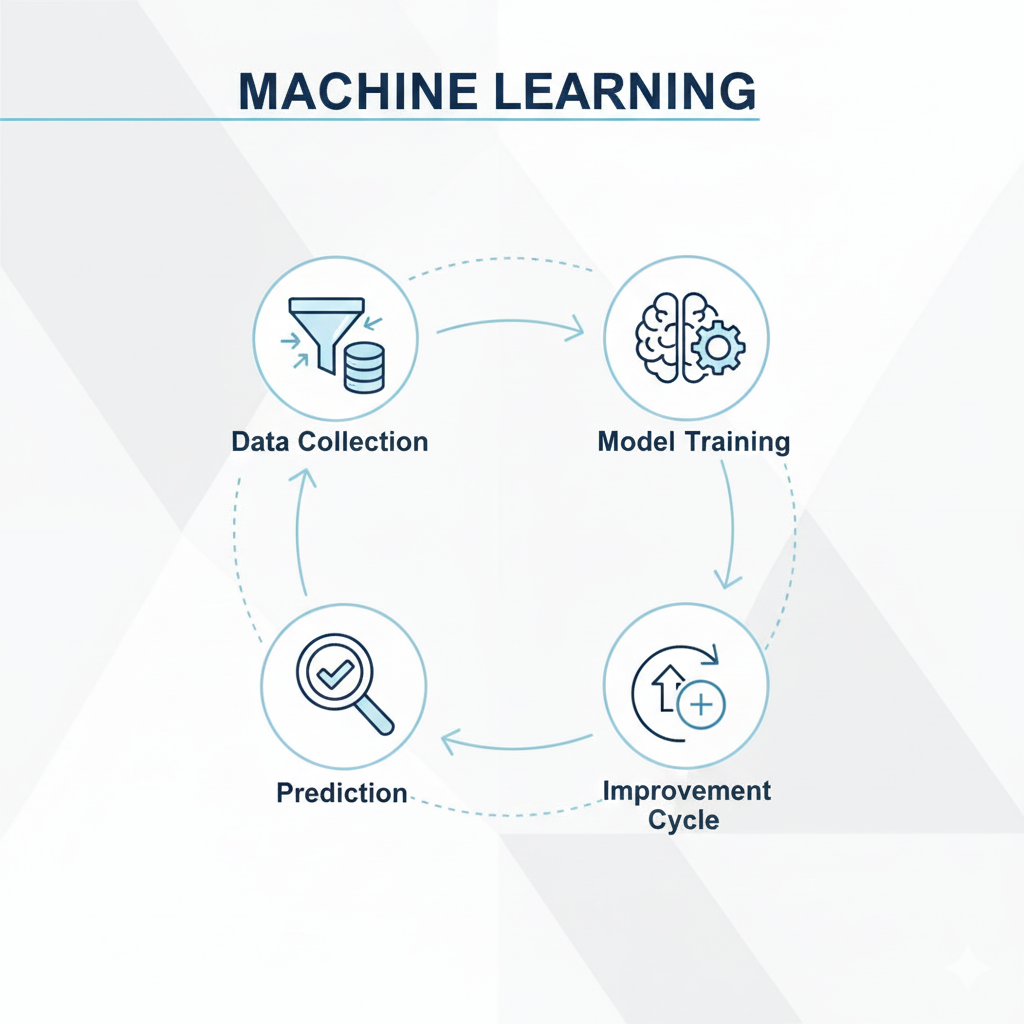
Machine learning works by using data, algorithms, and models.
Here’s a simple breakdown:
- Data Collection – The system is given data (text, images, numbers, etc.)
- Training – The algorithm analyzes the data to find patterns
- Model Creation – A model is built based on those patterns
- Prediction or Decision – The model is used to make predictions on new data
- Improvement – Performance improves as more data is added
The quality of data plays a major role in how accurate a machine learning system becomes.
Machine learning is often discussed alongside other AI concepts, including the different types of artificial intelligence based on capability.
Types of Machine Learning
Machine learning is commonly divided into three main types based on how the system learns.
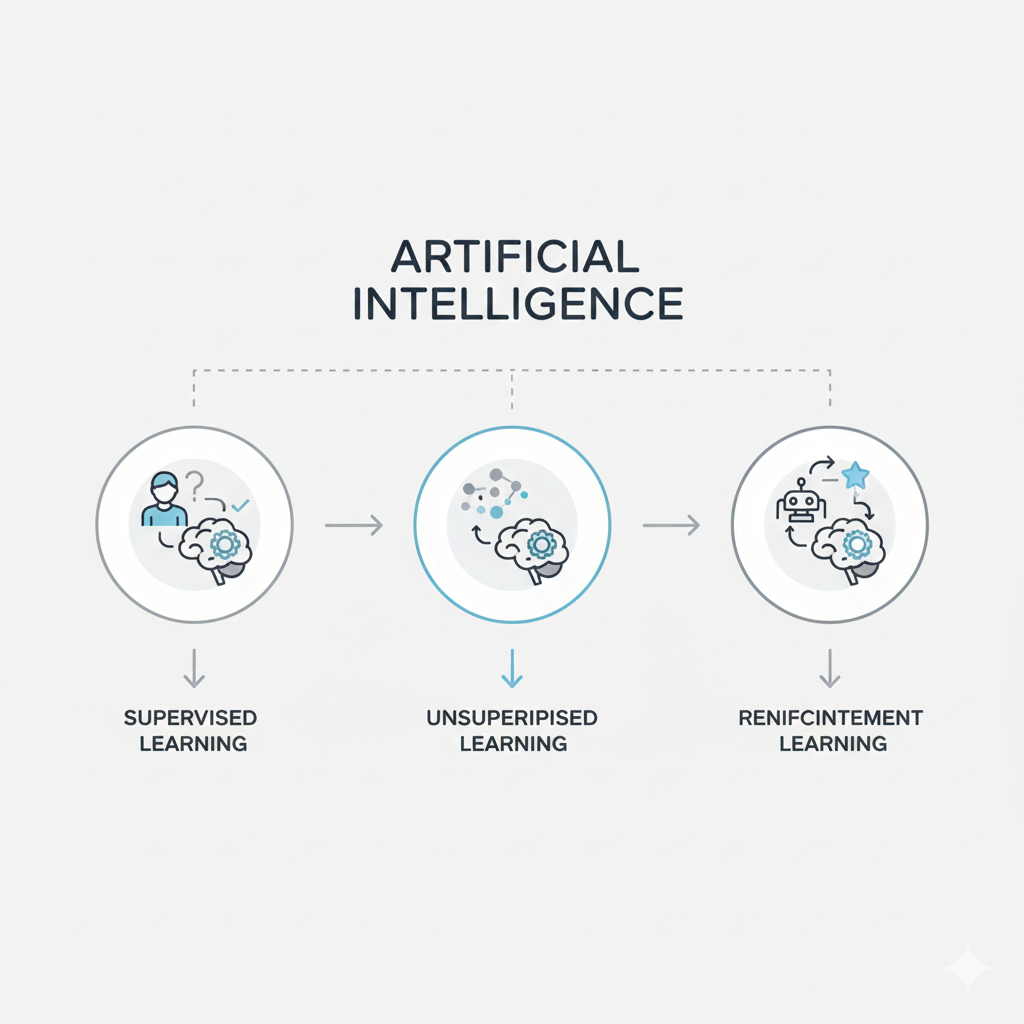
1. Supervised Learning
What Is Supervised Learning?
Supervised learning uses labeled data, meaning the correct output is already known.
The system learns by comparing its predictions with the correct answers and adjusting itself accordingly.
Examples of Supervised Learning
- Email spam detection
- House price prediction
- Image classification
- Medical diagnosis systems
Supervised learning is widely used because it produces accurate results when high-quality labeled data is available.
2. Unsupervised Learning
What Is Unsupervised Learning?
Unsupervised learning works with unlabeled data. The system tries to find patterns, relationships, or groupings on its own.
There are no correct answers provided in advance.
Examples of Unsupervised Learning
- Customer segmentation
- Market basket analysis
- Clustering similar products
- Anomaly detection
This type of learning is useful when you don’t know what patterns you’re looking for in advance.
3. Reinforcement Learning
What Is Reinforcement Learning?
Reinforcement learning is based on trial and error. The system learns by interacting with an environment and receiving rewards or penalties for its actions.
Over time, it learns which actions lead to the best outcomes.
Examples of Reinforcement Learning
- Game-playing AI
- Robotics navigation
- Self-driving vehicles
- Automated trading systems
This approach is especially useful for complex decision-making tasks.
Machine learning is one of several categories of artificial intelligence, each designed for different applications and use cases.
Real-World Applications of Machine Learning
Machine learning is already transforming many industries.
Common Applications Include:
- Recommendation systems (Netflix, Amazon)
- Voice recognition and speech-to-text
- Fraud detection in banking
- Medical image analysis
- Search engines
- Predictive analytics in business
Most modern AI systems rely heavily on machine learning to function effectively.
Machine learning is a subset of artificial intelligence that focuses on teaching computers to learn from data, as defined by Encyclopaedia Britannica.
Machine Learning vs Traditional Programming
In traditional programming:
- Rules are written manually
- Output depends strictly on predefined logic
In machine learning:
- The system learns rules from data
- Output improves over time
- Adaptable to new situations
This flexibility makes machine learning powerful and scalable.
Benefits of Machine Learning
- Automates complex tasks
- Improves accuracy over time
- Handles large amounts of data
- Reduces human effort
- Enables data-driven decisions
These advantages make machine learning a key technology for modern businesses.
Challenges of Machine Learning
Despite its benefits, machine learning has limitations:
- Requires large amounts of quality data
- Can inherit bias from training data
- Difficult to interpret complex models
- Needs computing power and expertise
Responsible use and proper data handling are essential.
The Future of Machine Learning
Machine learning continues to evolve rapidly. As data grows and computing power improves, ML systems will become more accurate, efficient, and accessible.
Future developments will focus on:
- Ethical AI
- Explainable machine learning
- Better data privacy
- Reduced bias
Machine learning will remain a core pillar of Artificial Intelligence.
Conclusion
Machine Learning is the driving force behind many modern AI applications. By allowing machines to learn from data instead of relying on fixed rules, it enables smarter, more adaptable systems.
Understanding machine learning helps you better understand Artificial Intelligence and prepares you for a future shaped by intelligent technologies.
Whether you’re a student, business owner, or curious learner, machine learning is a concept worth knowing.